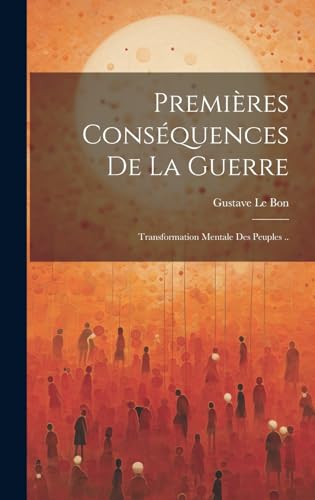
Premières conséquences de la guerre
Dans ce livre, L'auteur Gustave le Bon explore les effets mentaux et psychologiques de la guerre sur les populations. Il examine comment la guerre transforme la mentalit des gens et influence leur comportement et leur attitude. L'auteur utilise des exemples historiques pour tayer ses arguments et expose des id es stimulantes sur les guerres et leurs implications. Ce livre est une lecture essentielle pour les tudiants en histoire et les personnes int ress es par la psychologie sociale.
This work has been selected by scholars as being culturally important, and is part of the knowledge base of civilization as we know it.
This work is in the public domain in the United States of America, and possibly other nations. Within the United States, you may freely copy and distribute this work, as no entity (individual or corporate) has a copyright on the body of the work.
Scholars believe, and we concur, that this work is important enough to be preserved, reproduced, and made generally available to the public. We appreciate your support of the preservation process, and thank you for being an important part of keeping this knowledge alive and relevant.
Product Information
Product Information
Shipping & Returns
Shipping & Returns
Description
Dans ce livre, L'auteur Gustave le Bon explore les effets mentaux et psychologiques de la guerre sur les populations. Il examine comment la guerre transforme la mentalit des gens et influence leur comportement et leur attitude. L'auteur utilise des exemples historiques pour tayer ses arguments et expose des id es stimulantes sur les guerres et leurs implications. Ce livre est une lecture essentielle pour les tudiants en histoire et les personnes int ress es par la psychologie sociale.
This work has been selected by scholars as being culturally important, and is part of the knowledge base of civilization as we know it.
This work is in the public domain in the United States of America, and possibly other nations. Within the United States, you may freely copy and distribute this work, as no entity (individual or corporate) has a copyright on the body of the work.
Scholars believe, and we concur, that this work is important enough to be preserved, reproduced, and made generally available to the public. We appreciate your support of the preservation process, and thank you for being an important part of keeping this knowledge alive and relevant.