🚚 Free Worldwide Shipping on All Orders!Shop Now

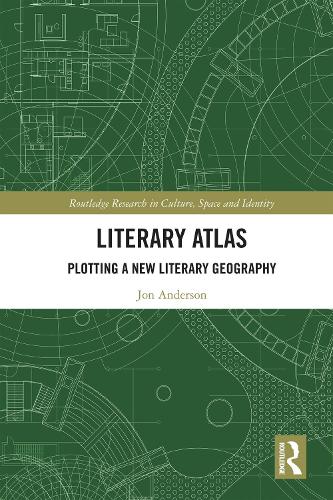
Literary Atlas
This book documents a new approach to literary geographies based around the Literary Atlas of Wales. It introduces an innovative "plotted" approach which empowers reading, creates connections to localities, histories, and communities, and inspires interest in literature and geography. It showcases how literary geographies can be mobilized through the plotted approach to reading. Through documenting the Literary Atlas of Wales project, this book outlines how the plotted approach was used to engage with English-language novels set in Wales. It argues that the future of this interdisciplinary subject area should be premised upon nurturing instability, turbulence, and experimentation in order to produce new insights which can change the way we understand the relations not only between literature and place but also between other modern categories, including academic disciplines. This book will be of interest to all readers of literature, human geography, mapping, heritage studies, and tourism. It will be beneficial to those interested in the domains of cartography, creative humanities, cultural sociology, human geography, literary studies, and print cultures.
$27.47
Original: $78.49
-65%Literary Atlas—
$78.49
$27.47Product Information
Product Information
Shipping & Returns
Shipping & Returns
Description
This book documents a new approach to literary geographies based around the Literary Atlas of Wales. It introduces an innovative "plotted" approach which empowers reading, creates connections to localities, histories, and communities, and inspires interest in literature and geography. It showcases how literary geographies can be mobilized through the plotted approach to reading. Through documenting the Literary Atlas of Wales project, this book outlines how the plotted approach was used to engage with English-language novels set in Wales. It argues that the future of this interdisciplinary subject area should be premised upon nurturing instability, turbulence, and experimentation in order to produce new insights which can change the way we understand the relations not only between literature and place but also between other modern categories, including academic disciplines. This book will be of interest to all readers of literature, human geography, mapping, heritage studies, and tourism. It will be beneficial to those interested in the domains of cartography, creative humanities, cultural sociology, human geography, literary studies, and print cultures.